
Criminal Court Records in Latimer County
A criminal court record is the case file that opens the moment the State of Oklahoma files a charge. The Latimer County Court Clerk builds and keeps that file. The clerk records each filing, files the charging paper, logs every hearing, and stores the orders and the final judgment. The result is a running history of one criminal case. It sits within the wider set of Latimer County court records the clerk maintains for civil, family, probate, and traffic matters.
Felony and misdemeanor cases are heard in the Latimer County District Court, the trial court of general jurisdiction. Latimer County belongs to Judicial District 16 along with LeFlore and Haskell counties. Felony cases carry a CF prefix, and misdemeanor cases carry a CM prefix. The District Court handles both. The Wilburton Municipal Court is a separate, lower court for city ordinance, parking, and city traffic matters, so it is not where state felony or misdemeanor case files live.
How to Search Latimer County Criminal Court Records
Most Latimer County criminal court records are searched online through two state systems. On Demand Court Records, known as ODCR, is the portal the county links from its official pages. The Oklahoma State Courts Network, or OSCN, is the state's own docket site. Both let you look up a case by name or by number.
- Open ODCR and pick Oklahoma District Courts or All Courts, then choose Latimer to narrow the search.
- Search by the defendant's name in Last, First form, or type a case number such as CF-2025-00001.
- Narrow the results by court, case type, and filed date when the list runs long.
- Open the case to read the docket, the charges, and the disposition.
- Ask the Court Clerk for a certified copy when a paper record is needed for court or legal use.
OSCN gives the official docket view, though a human-verification check can block quick access at times. The free ODCR search covers all courts, name and case-number lookups, and filed-date ranges. For older files, sealed-status questions, or court-reporter transcripts, the Latimer County Court Clerk counter is the fallback.
Stages of a Latimer County Criminal Case
A criminal case moves through set steps, and each step leaves a mark in the record. The state opens the case with a charging paper called an information. The defendant then answers the charge, the lawyers test the evidence, and the judge rules on the outcome. The docket lists these events in the order they happen.
Case flow: Charges Filed → Arraignment → Pretrial / Motions → Plea or Trial → Disposition → Sentencing
| Stage | What Happens |
|---|---|
| Arraignment | The defendant hears the charges and enters a plea of guilty, not guilty, or no contest. |
| Pretrial / Motions | Lawyers file motions and share evidence. A felony may get a preliminary hearing to test probable cause before bind-over. |
| Plea or Trial | Most cases end in a plea. Others go to trial before a judge or a jury. |
| Sentencing | The judge sets the penalty, which can include jail or prison, fines, court costs, or probation. |
Note: A preliminary hearing applies to felony charges, where the judge decides whether enough proof exists to send the case forward.
What a Latimer County Criminal Court Record Shows
The case file holds a clear set of fields. Read top to bottom, they tell you who was charged, with what, and how the case ended. Oklahoma case numbers follow a prefix, year, and sequence, such as CF-2025-00001 for a felony or CM-2025-00010 for a misdemeanor. The fields below appear in most Latimer County criminal case files.
| Field | What It Shows |
|---|---|
| Case Number | The prefix, year, and sequence, such as CF for a felony or CM for a misdemeanor. |
| Defendant | The person the state has charged in the case. |
| Charges | Each count, the statute cited, and the level of the offense. |
| Plea | How the defendant answered: guilty, not guilty, or nolo contendere. |
| Disposition | The case outcome, such as a conviction, a dismissal, or a deferred judgment. |
| Sentence | The penalty imposed, with time, fines, costs, restitution, and probation terms. |
The docket also lists the judge, the attorneys, bond entries, hearing dates, and the running costs and fees. Some documents show as docket text only, while others sit behind paid or attorney image access on ODCR. Protected items like Social Security numbers, account numbers, and minor names are redacted.
Charges vs. Convictions in Latimer County
A charge is not a conviction. When police arrest a person, the District Attorney decides whether to file a case, and that filing is only an accusation. A conviction comes later, through a guilty plea or a verdict. A criminal court record can show charges that were dropped, dismissed, or that ended in acquittal, so the outcome line matters more than the charge line. For a closer look at the charges as filed, the Latimer County arrest records and court charges page breaks down the charging side.
| Charge | Conviction | |
|---|---|---|
| Stage | Accusation | Verdict or plea |
| Burden of Proof | Probable cause | Beyond reasonable doubt |
| Public Record | Yes | Yes |
Reading Dispositions and Sentences in Latimer County
The disposition is the short line that states how the case closed. A clean reading of it saves a lot of guessing. Common entries read guilty, not guilty, dismissed, or nolo contendere. Oklahoma also uses deferred and suspended sentences, which change how the penalty is served. The terms below show up often in Latimer County criminal court records.
- Deferred sentence
- Judgment is held back under set conditions, and the case may be dismissed if the person meets them.
- Suspended sentence
- The sentence is imposed, but the jail or prison time is held back while conditions are met.
- Probation
- Court supervision that follows sentencing or a deferred plea.
- Nolo contendere
- A no-contest plea that accepts the penalty without an outright admission of guilt.
- Restitution
- Money the court orders the defendant to repay a victim.
Some sentences route a defendant into a treatment program instead of straight jail time. Oklahoma runs problem-solving courts that can change how a sentence is served, described on the state drug court overview.
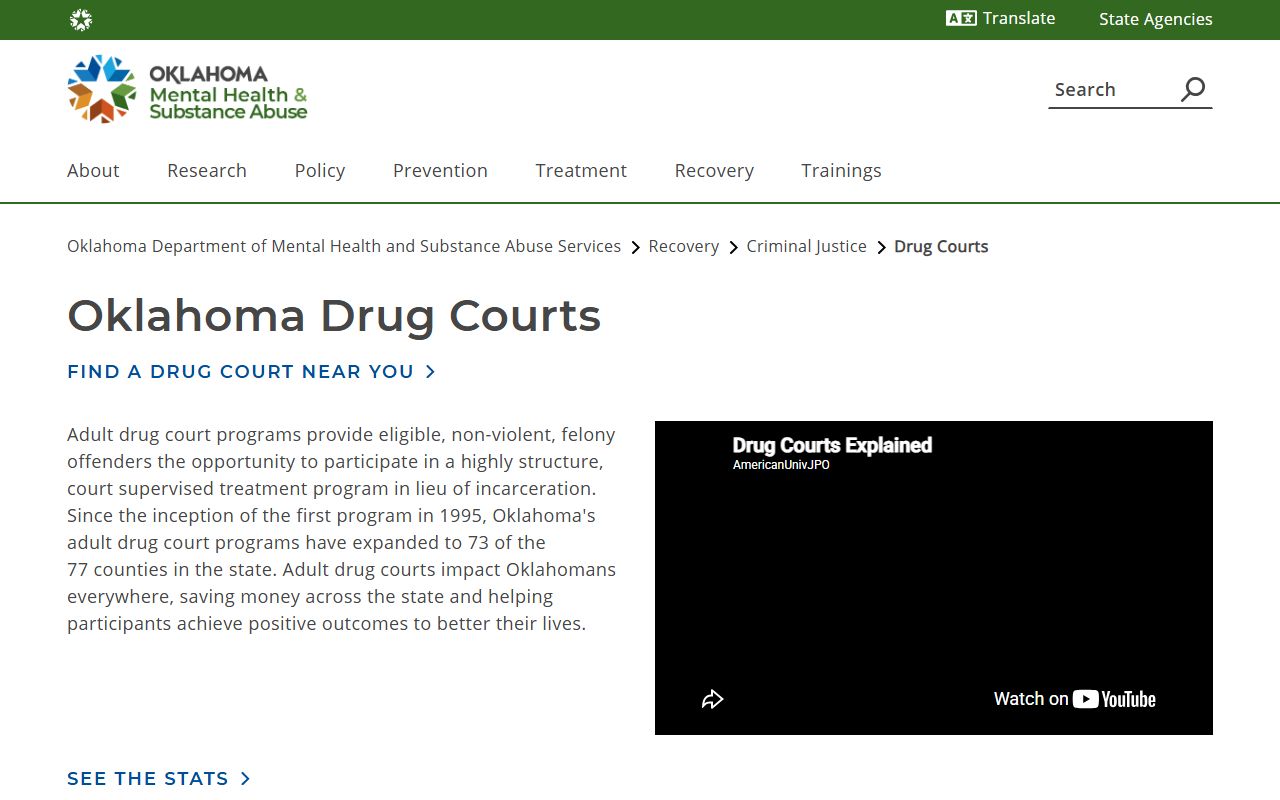
When a Latimer County defendant enters and is supervised by such a program, those entries land in the criminal court record and can shape the final disposition and sentence.
Statewide Criminal History and Background Checks
A county case file covers one case in one court. A statewide criminal history pulls records from across Oklahoma into one report. The Oklahoma State Bureau of Investigation, the OSBI, runs that check through its CHIRP background check portal. The District Attorney's office links to CHIRP for criminal history requests.
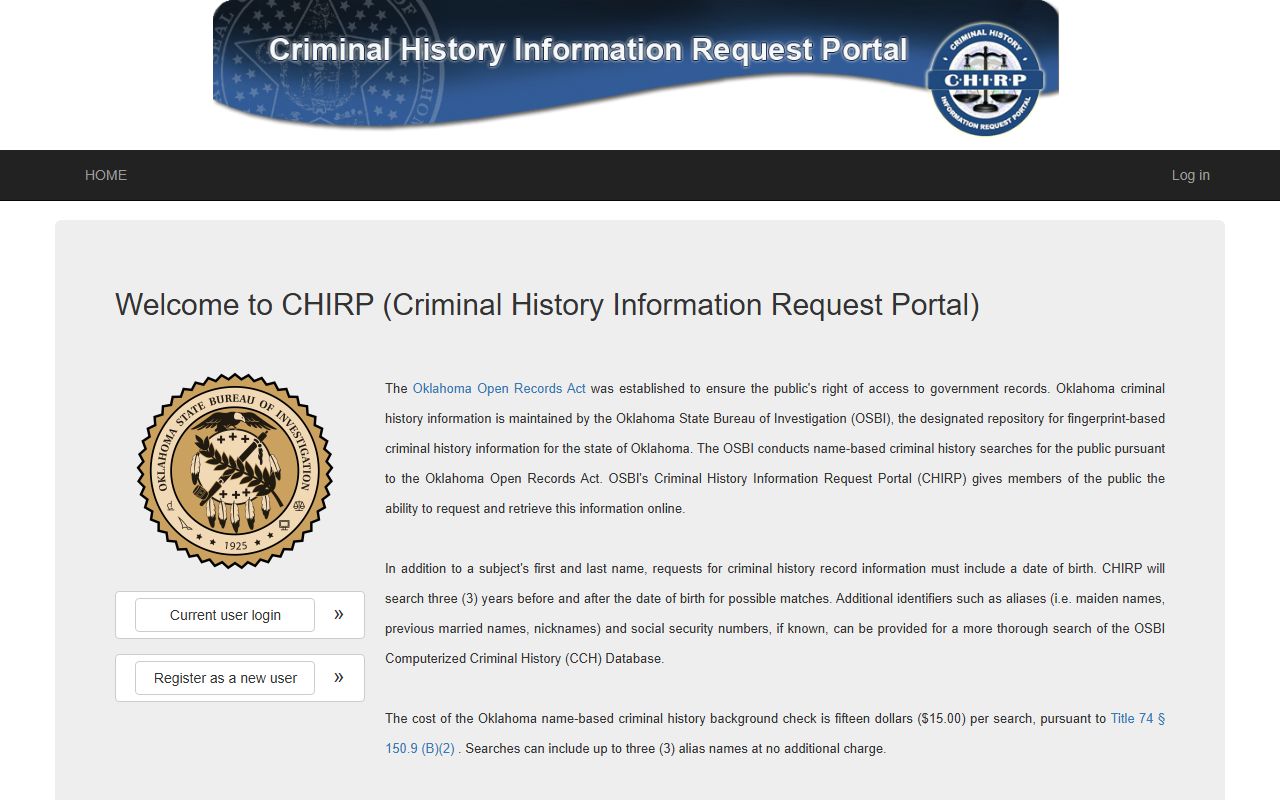
A CHIRP report is a strong way to confirm a person's record statewide, not just in one county. Use it alongside the Latimer County criminal court records for a fuller picture of charges and convictions.
Important: This site is not a consumer reporting agency under the Fair Credit Reporting Act, and its records cannot be used for credit, hiring, housing, or insurance screening.
Who Prosecutes and Defends Latimer County Criminal Cases
The state files criminal charges, and a defendant has the right to a defense. Latimer County sits in Oklahoma District Attorney District 16, where Kevin Merritt serves as District Attorney. The District 16 office in Wilburton files or declines charges after an arrest, handles plea offers, and tracks restitution and supervision payments. An arrest alone does not mean the DA filed a District Court case.
On the other side, a defendant who cannot afford a lawyer may qualify for help from the Oklahoma Indigent Defense System, known as OIDS.
OIDS handles trial-level District Court cases in 75 of Oklahoma's counties, and Latimer is one of them. The appointment of counsel shows up in the case file once a judge grants it.
Court-Appointed Counsel in Latimer County
A judge, not OIDS, decides whether a person qualifies for a free lawyer. The path runs through the Court Clerk, so the request becomes part of the case record. OIDS guidance lays out how to ask for court-appointed counsel.
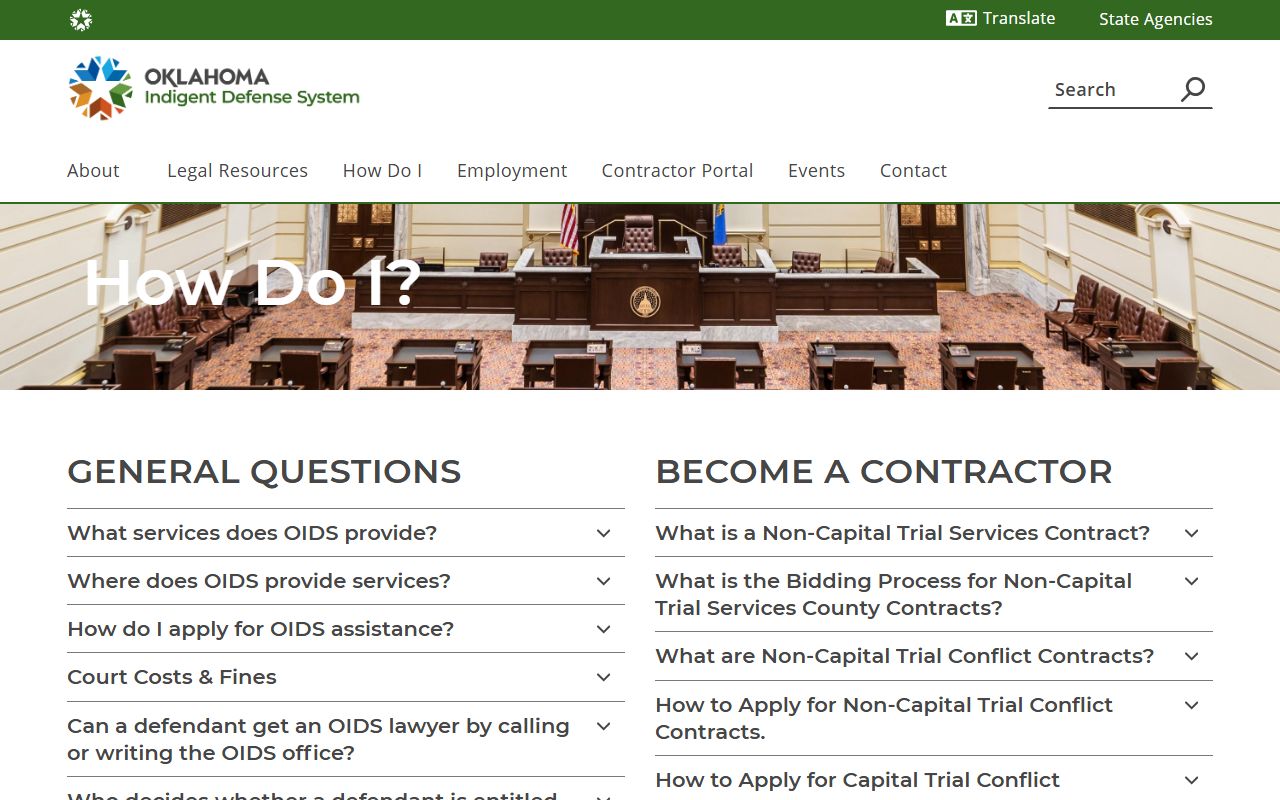
- File an application for court-appointed counsel with the Court Clerk in the county where the charge is filed.
- Pay the application fee of $40 to the Court Fund, or ask to defer it until the case ends.
- In-custody defendants may get the forms near the first appearance or request one from jail staff.
- Wait for the judge to rule on indigency, since OIDS cannot grant appointment by phone or letter.
Coverage is not the same in every county. The system's non-capital trial coverage map shows which counties it serves and where satellite offices sit.
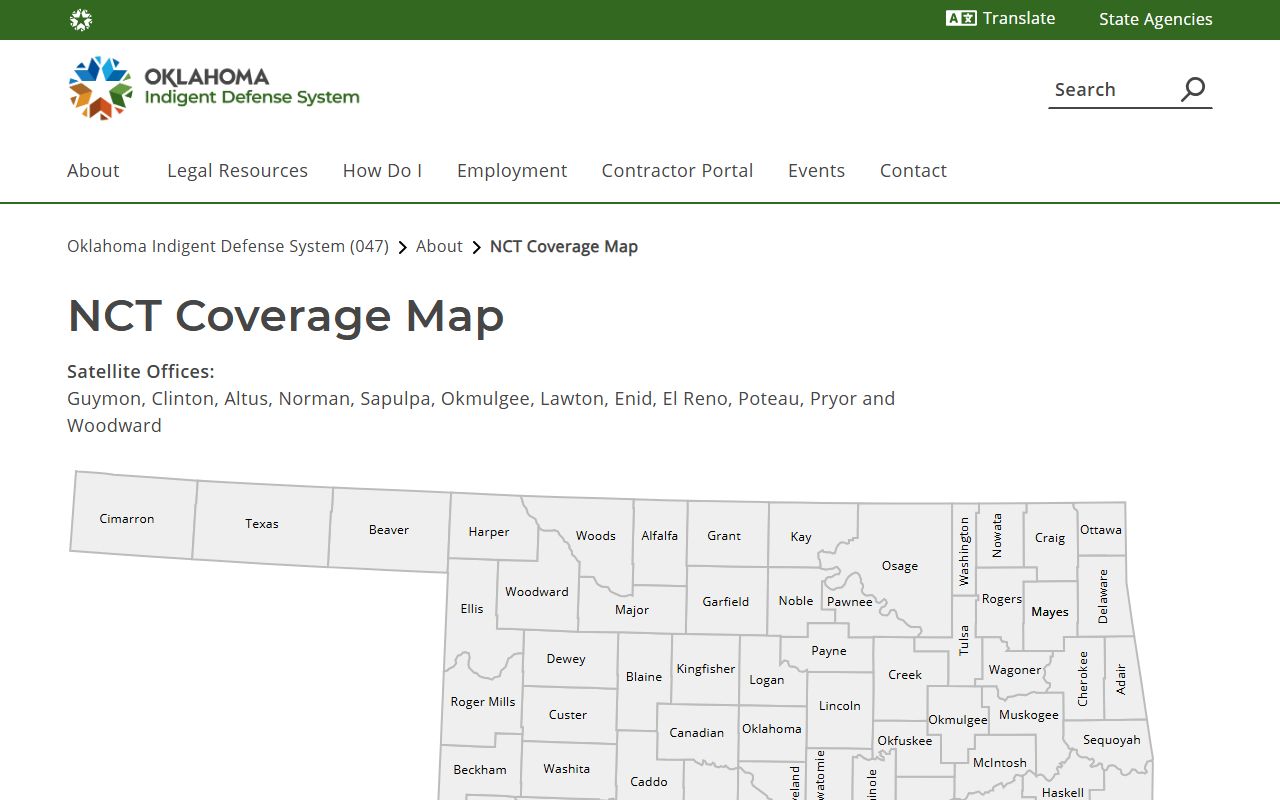
Because Latimer County is an OIDS county, an appointed attorney named in the docket is most often an OIDS lawyer or a contract attorney working under it.
Note: A judge sets indigency at the first appearance, so a defendant should bring the application to the Court Clerk rather than contact OIDS directly.
Sealed vs. Expunged Latimer County Records
Some criminal records leave public view. Sealing and expungement are two routes, and they are not the same. In Oklahoma, an expungement starts with a civil petition filed in the District Court under the Title 22 expungement rule. The court grants or denies it, and the order tells each record holder what to do.
| Sealed | Expunged | |
|---|---|---|
| Visibility | Hidden from public view | Treated as though it never existed |
| Law Enforcement | Limited access | Very limited access |
| Eligibility | Set by court order in qualifying cases | Set by Title 22 petition and disposition |
The public effect varies by case. Some orders seal the court file, some restrict the arrest record, and some still allow narrow law-enforcement access. Filing fees and waiting periods depend on the case type and the sentence. Latimer-specific expungement fees were not posted on county pages, so confirm them with the Court Clerk before filing.
Public Access to Latimer County Criminal Court Records
Oklahoma treats most court files as open. The Oklahoma Open Records Act is the baseline law that keeps public records open unless another statute makes a file confidential. For Latimer County criminal court records, the first step is an online search on ODCR or OSCN, then a call or visit to the Court Clerk for files that are older, sealed in status, or need certification.
Key Statutes:
Oklahoma 51 O.S. § 24A.5 - Public records stay open during regular business hours, subject to set exemptions and reasonable procedures.
Oklahoma 51 O.S. § 24A.8 - Law-enforcement records, including jail booking and arrest data, are public, though investigative parts may be withheld.
Federal Criminal Cases in Latimer County
Not every criminal case from Latimer County stays in state court. Serious federal matters are handled by the U.S. District Court for the Eastern District of Oklahoma, which covers Latimer and 25 other counties. That court sits in Muskogee and is fully separate from the Latimer County District Court. Recent federal cases tied to Latimer County have included a firearm prosecution and a murder sentencing brought in this district.
Federal case files are not held by the Latimer County Court Clerk. They are searched through the federal PACER system rather than ODCR or OSCN. After a federal sentence, the Bureau of Prisons holds custody, not the county jail.
Note: Federal and state courts run on separate dockets, so a federal charge tied to Latimer County will not appear in the county District Court record.
Restricted Latimer County Criminal Court Records
Open access has limits. Several kinds of criminal and related records stay closed to ordinary public lookup, either by statute or by court order. Juvenile cases are the clearest example, since the Oklahoma juvenile records law makes juvenile court, agency, and law-enforcement files confidential except where a statute allows release. The categories below are commonly restricted.
- Juvenile cases held confidential by statute.
- Sealed or expunged records removed from public portals after a court order.
- Mental health and adult guardianship matters tied to capacity.
- Adoption files, which are not public docket lookups.
- Protected identifiers such as account numbers, dates of birth, and minor names.
When a file is restricted, the public version may show limited docket text or nothing at all. Access in those cases is usually limited to the parties, their attorneys, or others a court allows. The Latimer County Court Clerk can confirm whether a given file is sealed, confidential, or simply not online.